

Once you know what you owe, actually sending the money to the IRS is easier than most people expect. There are five ways to pay estimated taxes — and knowing which one fits your situation can save you time, fees, and headaches.
If you’re self-employed, freelancing, running a small business, or earning income that isn’t subject to payroll withholding, the IRS expects you to pay taxes throughout the year not just in April. These are called estimated tax payments, and they’re due four times a year.
You generally need to pay if you expect to owe at least $1,000 in federal taxes. The easiest way to stay penalty-free is to pay 100% of what you owed last year (or 110% if you earned over $150,000), split into four equal quarterly payments.
Once you have that number, here’s exactly how to send it.
Best for: Most individuals. It’s free, fast, and requires no account setup.
IRS Direct Pay is the simplest way to pay. It’s a free bank transfer directly from your checking or savings account — no fees, no enrollment, and your confirmation is immediate.
How to use it:
That’s it. Save the confirmation number you receive — it’s your proof of payment.
One thing to know: Direct Pay doesn’t store your information between sessions. Every time you use it, you’ll re-enter your details. If you want a payment history in one place, Option 2 is better.

Best for: People who want to track all their payments, view IRS records, or need IRS support for past payments.
Creating a free IRS online account gives you a dashboard where you can see your payment history, outstanding balances, tax records, and any notices the IRS has sent. For anyone who has ever had a payment misapplied or needed IRS help sorting out their account, this is a game changer.
How to set it up:
What you can see once you’re in:
Elena, a freelance photographer in Washington State, set up her IRS account after a payment she mailed never showed up on her record. Having visibility into what the IRS actually had on file and being able to pay directly going forward. This saved her from a repeat situation.

Best for: Small business owners, people paying both personal and business taxes, and anyone who wants to schedule payments in advance.
EFTPS is the IRS’s more powerful payment system. It requires a one-time enrollment (which takes 7–10 days to activate by mail), but once you’re in, it’s the most flexible option available.
How to enroll:
How to pay once enrolled:
EFTPS is popular with small business bookkeeping clients because it allows their accountant or bookkeeper to schedule all four quarterly payments at the start of the year. Many small business accounting and corporate tax services use it to manage estimated payments on behalf of their clients.
Heads up: If you lose your PIN or forget your password, re-enrollment can take another 7–10 days. Store your login information somewhere secure.
Best for: People who want to earn rewards points or need a short-term float on their payment.
The IRS doesn’t accept credit or debit cards directly, but they work with IRS-approved third-party processors who do. There is a fee, so weigh that against any card rewards you’d earn.
Current fees (approximate):
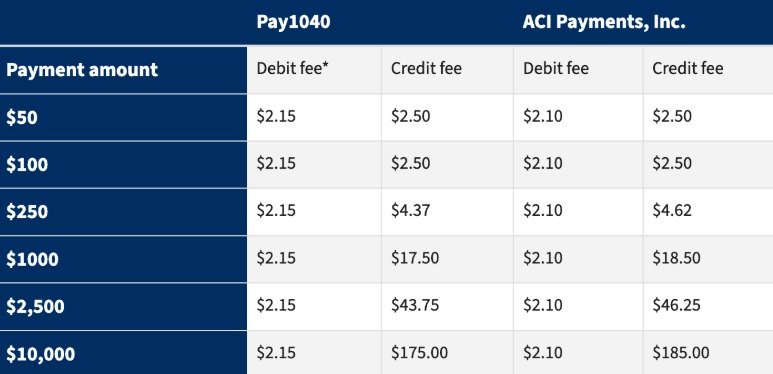
How to pay:
Marcus, a consultant in Miami, Florida, started paying his quarterly estimated taxes by credit card specifically to hit his annual spending threshold for a travel rewards card. His florida accountant confirmed the fee was deductible as a business expense — so it worked out in his favor.
Worth knowing: Even if you pay by card, the payment still gets credited to your IRS account the same way as a bank transfer. It shows up identically on your tax record.
Here’s a simple way to think about it:
Use IRS Direct Pay if you want the fastest, fee-free option and don’t need to track payment history in one place.
Set up an IRS Online Account if you’ve ever had IRS support issues, want visibility into your account, or want everything in one dashboard.
Use EFTPS if you’re a small business owner, work with bookkeeping services, or want to schedule all four payments at once and forget about it.
Pay by card if you’re chasing rewards and the math makes sense after accounting for the processing fee.
No matter which method you choose, always save your confirmation. Whether you’re working with a virtual CFO, a queer CPA, or managing your own small business bookkeeping, that confirmation number is the first thing anyone will ask for if a payment needs to be traced.
Paying estimated taxes isn’t complicated, it’s mostly just knowing where to go. IRS Direct Pay handles most people’s needs in under five minutes. EFTPS is worth the setup if you’re running a business or want to automate the process. And if you’d rather hand it all off entirely, a personal accountant or small business tax service can handle the payments on your behalf.
The main thing is to pay on time, save your confirmations, and not wait until April to deal with it.